
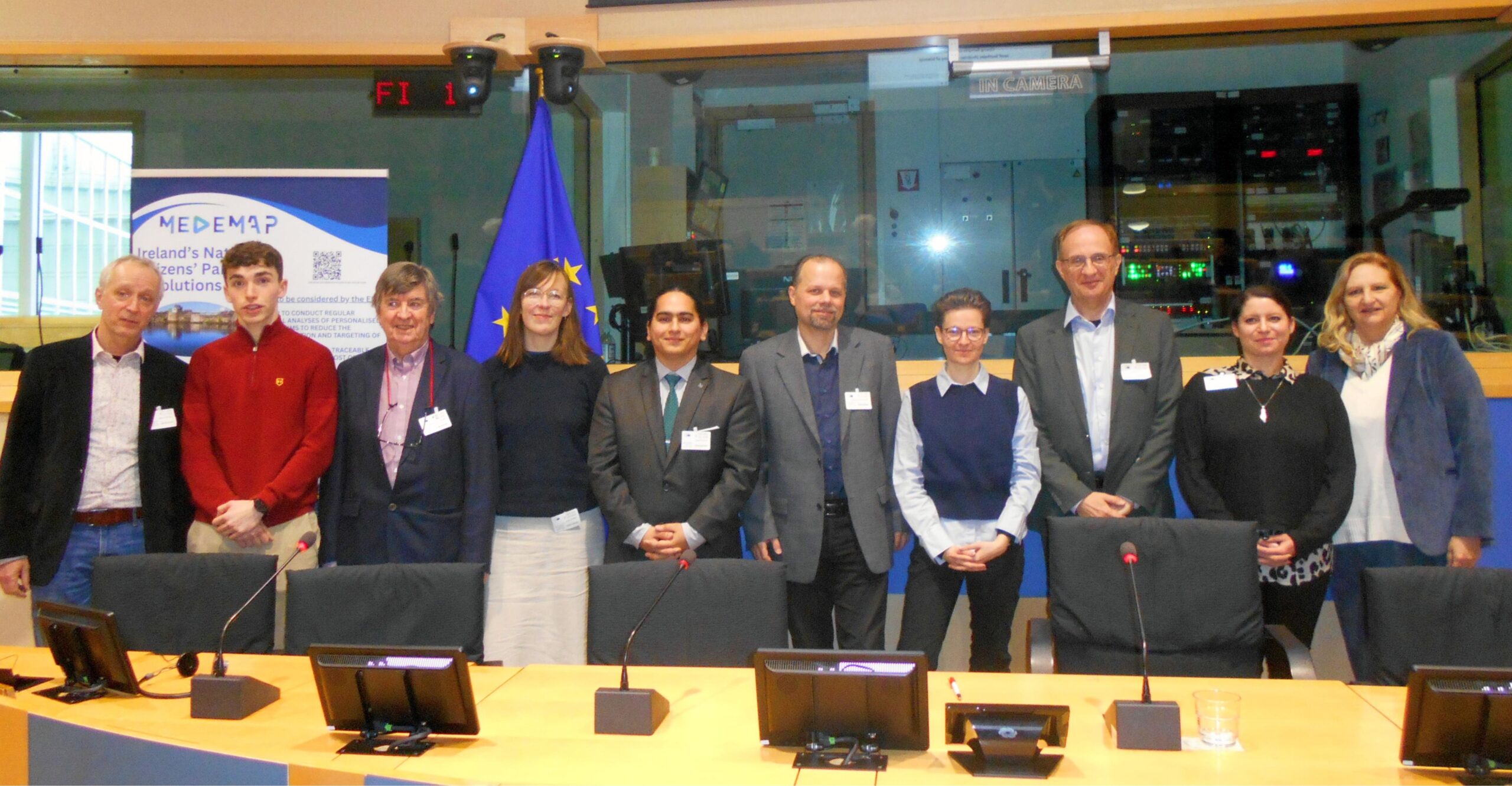
What can EU media policy learn from European citizens? On 13 January 2026, two representatives from each of the four Citizens‘ Parliaments on Media and Democracy, which were held in Austria, the Czech Republic, Ireland and Slovenia in 2025, presented their resolutions in Brussels, at a roundtable event chaired by Helmut Peissl from COMMIT.
The eight delegates, designated by their respective Citizens’ Parliaments, addressed a selection of demands with a European dimension to the Members of the European Parliament (MEPs). Two Austrian MEPs, Hannes Heide (Progressive Alliance of Socialists and Democrats) and Lena Schilling (Greens/European Free Alliance), participated in the roundtable discussion and expressed their views on the demands. This event was organized as part of the seminar, „Regulating Media for Future Democracies: Political and People’s Voices,“ hosted in the European Parliament by Slovenian and Estonian MEPs Irena Joveva and Marina Kaljurand within the framework of the MeDeMAP research project.
133 resolutions to make the media and democracy stronger
The 133 resolutions adopted by the four Citizens’ Parliaments relate to ensuring the quality of information, reflecting social diversity and strengthening opportunities for participation in the media. They also promote media literacy and address the inadequate regulation of large media platforms.
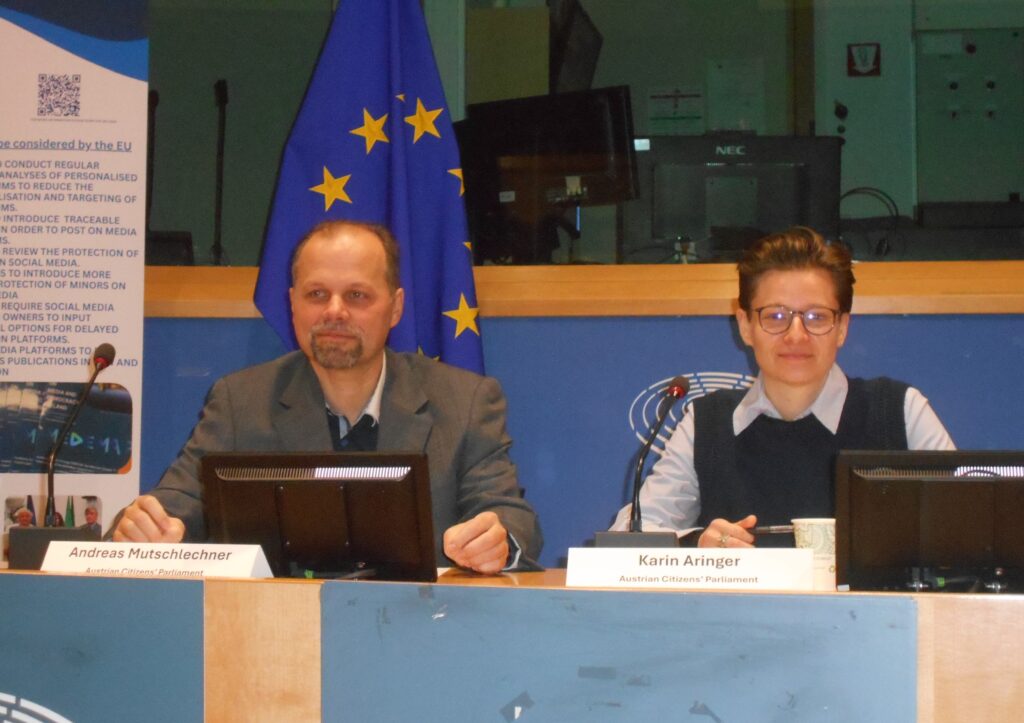
The Austrian delegates emphasised the importance of upholding quality standards in the media and supporting independent journalism. “To participate in democracy, Citizens need media they can rely on, which enable public debate, show social diversity, and support participation for everyone”, advocated Karin Aringer. Andreas Mutschlechner highlighted the need to protect media freedom, calling on the European Union to create a stable financial framework to support civil society and independent media.
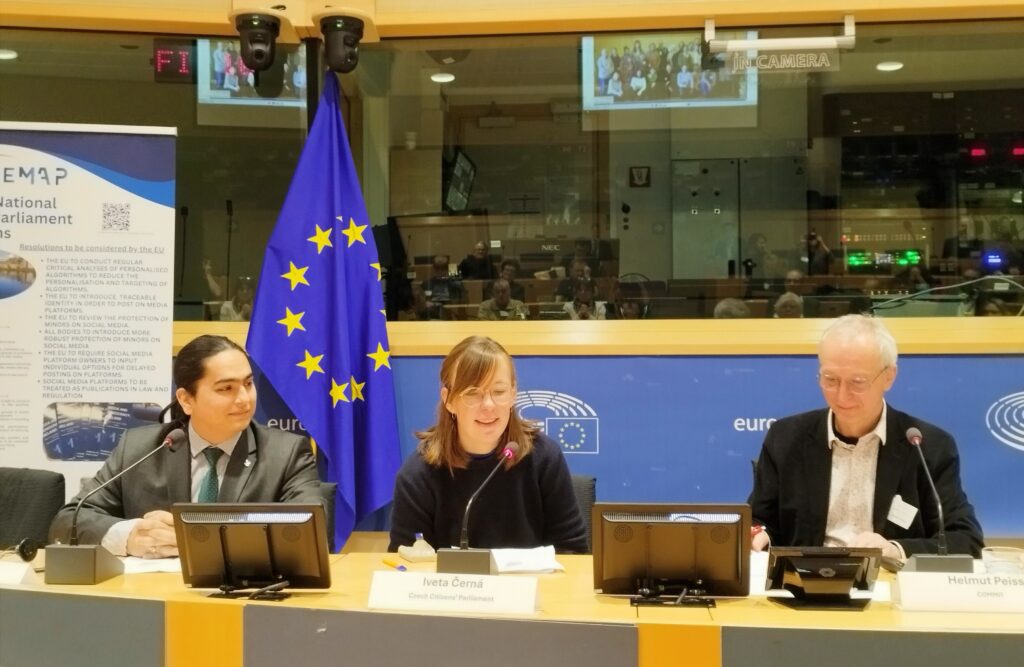
Czech delegates Josef Tokár and Iveta Černá called for EU measures to protect journalists from legal and economic pressure, including the establishment of an independent support body, and the fast-tracking of SLAPP cases against journalists. They also urged the EU to support underrepresented groups in entering media professions and to implement measures to promote diversity in newsrooms and news coverage.
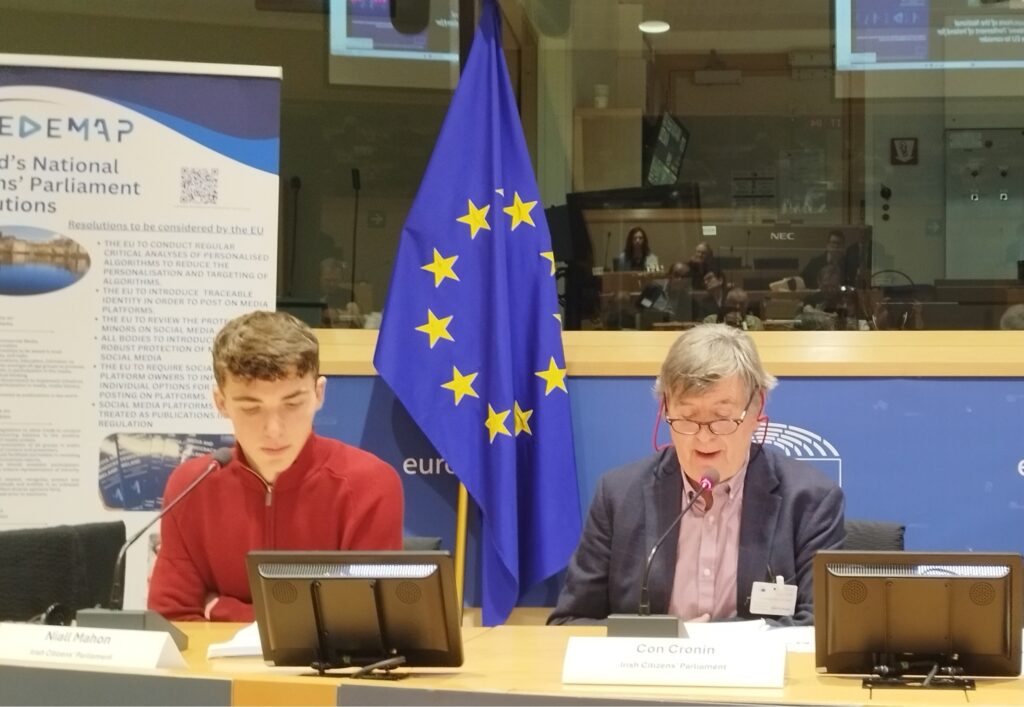
Irish delegates Con Cronin and Niall Mahon called on the EU to regulate and monitor digital media platforms. In particular, they proposed publishing regular analyses of algorithms, strengthening the protection of minors, and introducing traceable posting identities and delayed posting options.
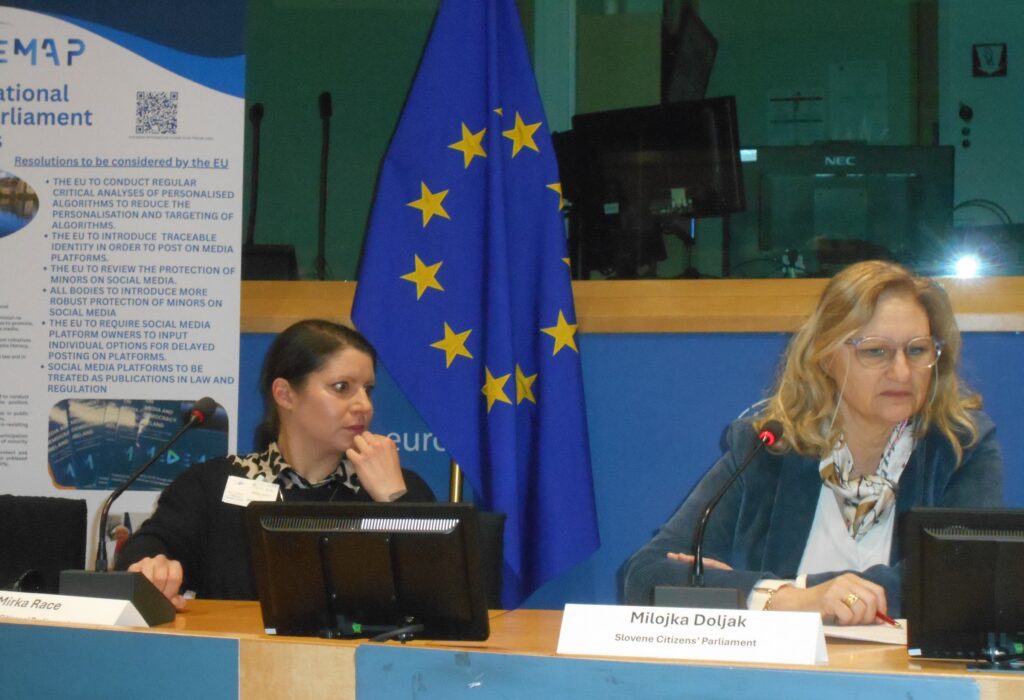
To support quality standards in the media, the Slovenian CP members Mirka Race and Milojka Doljak called on the EU to set up an exchange programme for professional journalists. They also advocated measures such as quotas to strengthen the representation of women and minorities in the media.
The four delegations emphasised the importance of community media in strengthening citizens‘ participation and improving the representation of society in the media. They called on the EU to promote media literacy among all generations.
MEPs for the regulation of digital platforms and the promotion of media literacy
In his response, MEP Hannes Heide acknowledged the need to promote diversity in the media and ensure transparency of media ownership, emphasising the lack of implementation of existing EU regulations. With regard to the call for regulation of digital platforms, the Austrian MEP took the view that “what is illegal elsewhere should also be illegal on the internet”.
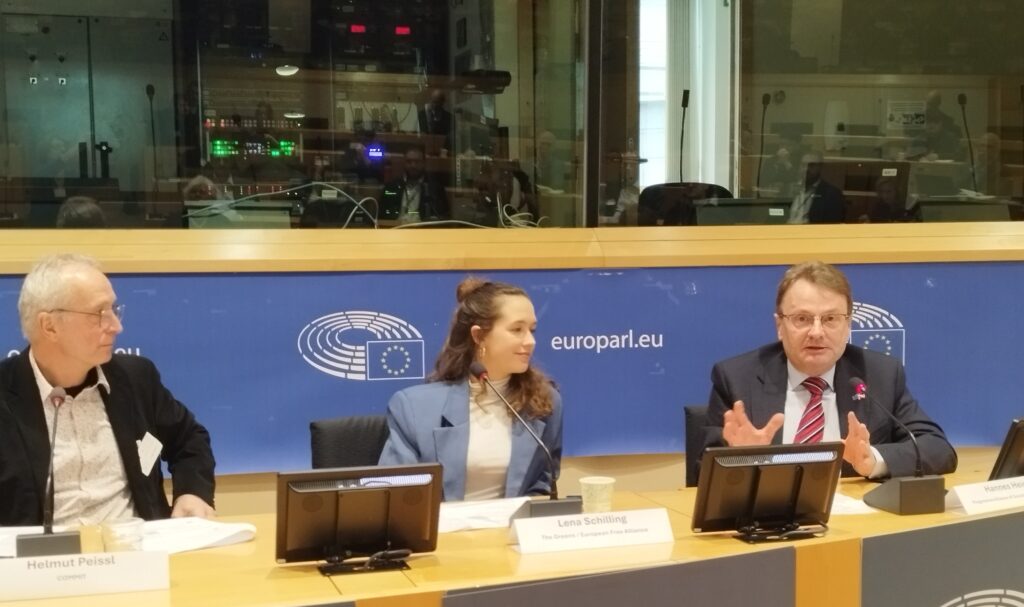
MEP Lena Schelling said that she views the media as ‚a key point for saving democracy‘ and that she could support the resolutions of the citizens‘ parliaments. Regarding the digital platforms, she agreed that they should be regulated and that the EU should be “clearer and faster to act” but she expressed doubts about measures promoting age bans. Both MEPs emphasised their support for media literacy.
Presenting the results to MEPs in Brussels marked the final stage of the citizens‘ parliaments. Their resolutions have already been presented and disseminated nationally. Thanks to the commitment of their members, the four citizens‘ parliaments in Austria, the Czech Republic, Slovenia and Ireland produced 133 resolutions, which will hopefully inspire political and media stakeholders at local, national and European levels.
National reports and resolutions: For more information on the resolutions adopted by the Citizens’ Parliaments on Media and Democracy, please see the English reports: Austria, Ireland, Slovenia, and the Czech Republic.